



Current Issue

Anatomy of a 21st-century renaissance: the technical triumphs of Castle Howard
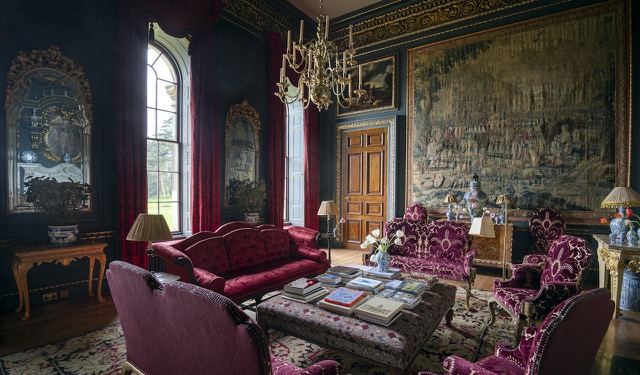 The term "renaissance" is frequently overused in the heritage sector, but the sweeping multi-year conservation campaign at North Yorkshire’s Castle Howard genuinely earns the title. Driven by estate custodians Nicholas and Victoria Howard, this massive undertaking represents a masterclass in combining archival research, traditional trade skills, and modern building conservation science.
For historic building contractors and specialist specifiers, the project serves as a compelling case study. It demonstrates how to reverse decades of catastrophic fire damage and environmental degradation while subtly adapting a Grade I-listed Baroque masterpiece for the 21st century.
Reconstructing the Baroque: The Tapestry Drawing Room
The true crown jewel of the recent indoor campaign is the complete restoration of the Tapestry Drawing Room. Tragically gutted during the devastating estate fire of 1940, the space required an uncompromising approach to historical reconstruction. Led by traditional classical architect Francis Terry, the project rejected modern shortcuts, relying instead on traditional materials that respect the building’s original breathability and structural movement.
A primary technical challenge lay overhead. Master plasterer Philip Gaches was tasked with executing the intricate, hand-run decorative lime plasterwork for the ceiling. Using traditional running moulds and hand-modelling techniques, the plasterwork provides the structural and aesthetic framing necessary to handle the weight of the room's historic textiles.
Beneath the plasterwork, the walls were outfitted with bespoke timber panelling designed and crafted by the heritage joiners at Houghtons of York. This joinery provides a stable, ventilated substrate for the room’s main historical assets: the original 1706 "Four Seasons" tapestries by John Vanderbank.
To safely mount these heavy, fragile textiles after centuries away from their original positions, textile conservator Alison Stanton worked alongside specialist historic upholsterers from the A.T. Cronin Workshop. Together, they developed low-tension, conservation-grade hanging systems that protect the delicate weave from environmental strain while allowing the fabric to breathe naturally against the new timber backing.

Structural Engineering Meets Fine Art: The Long Gallery and Grand Staircase
Moving beyond the drawing-room walls, the project required a massive structural overhaul of the estate’s public paths. Designer Alec Cobbe, supported by Alexey Moskvin, masterminded a dense, historically accurate "picture hang" spanning the Grand Staircase and the expansive Long Gallery.
From a contractor perspective, hanging hundreds of heavy, priceless canvases and mounting antique marble busts requires complex weight-distribution calculations and secure anchoring. Fine art handling specialists Constantine managed the logistical feat of transporting, positioning, and securely anchoring the massive private painting collection into historic masonry walls without disrupting fragile underlying substrates.
Lighting these priceless paintings presented a huge challenge, as Iain McIntosh at Heritage Lighting Matters explained: "Our part of this project was to sustainably upgrade the existing picture lights from the old technology, which offered limited light coverage and poor distribution across the canvas. In many instances, the paintings were overlit at the top, with little or no light levels further down." Iain rose to the challenge, as explained in his article elsewhere in this feature.
Simultaneously, Cliveden Conservation took charge of the Grand Staircase. Their decorative arts conservators cleaned, repaired, and structurally stabilized the antique marble busts and delicate plaster casts. They engineered discrete, non-destructive floor and wall mounts to ensure long-term stability against the vibrations of heavy visitor footfall.
The aesthetic and structural success of these galleries is tied directly to invisible modern infrastructure. Traditional oil-refining techniques used by master decorators Hesp & Jones provided the complex interior marbling and historic paint finishes. Meanwhile, specialized furniture restorers like Mark Fitzgerald painstakingly repaired the historic finishes on the massive Long Gallery bookcases and heavy timber doors, ensuring they can withstand daily commercial operation.
 Defending the Envelope: Specialist Joinery and Exterior Fabric Care
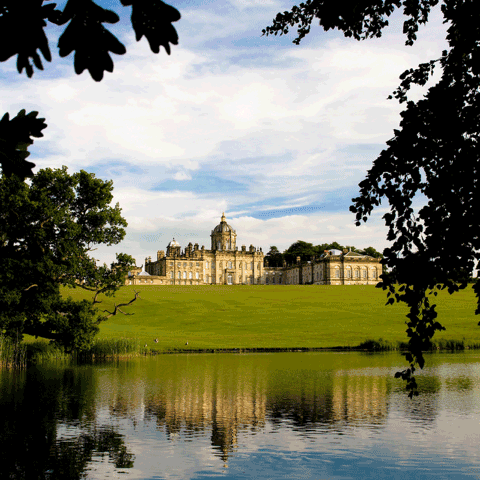
No interior restoration can survive without a weatherproof external envelope. The external window campaign at Castle Howard highlights the modern balance between retaining original historic fabric and utilizing advanced conservation polymers.
Stephanie Hall-Stead, Head of Built Environment at Castle Howard, coordinated a phased timber repair project across the estate's vast network of monumental Georgian windows. Rather than replacing weathered timber with unvetted modern replicas, the in-house maintenance team partnered with external joinery contractors using specialized materials from Repair Care.
By executing precision splicing and using elastic timber-epoxy resin systems, contractors stabilized and preserved the original 18th-century wood. This approach stopped decay in its tracks while preserving the irreplaceable wavy historic glazing. It proves that targeted, highly technical timber conservation is far more cost-effective and structurally authentic than wholesale replacement.
The Trade Lesson
The "21st Century Renaissance" at Castle Howard confirms a fundamental truth of the heritage trade: the longevity of our finest architectural landmarks relies entirely on the survival of specialist skills. When traditional crafts like hand-run lime plastering and historic joinery are paired with modern fine art engineering and polymer science, the result is an envelope built to endure for centuries to come.
Photos courtesy of Heritage Lighting Matters
VISIT OUR ASSOCIATED SITES