



Current Issue

Guardians of the past, pioneers of the future: inside the National Trust’s modern restoration revolution
 For over a century, the National Trust has stood as the custodian of England’s soul. Tasked with protecting thousands of miles of coastline, vast landscapes, and hundreds of historic buildings, the charity ensures that the nation's shared heritage remains intact for future generations. However, the nature of conservation is undergoing a radical shift. Today, heritage preservation is no longer just about freezing a moment in time or locking history behind velvet ropes.
In the modern era, the National Trust is actively carrying out and preparing for several major conservation, restoration, and redevelopment projects across its regional hubs. These initiatives represent a sophisticated balancing act: defending fragile centuries-old architecture while adapting properties to withstand climate change, boost local biodiversity, and welcome a more diverse, accessible modern public. From monumental textile rescues in the Midlands to massive multi-million-pound infrastructure overhauls in Yorkshire, a look across the Trust’s regional hubs reveals an organization at the peak of its modern preservation powers.
The London & South East Hub: Climate Resilience and Community Roots
In the south of England, the Trust is tackling the dual challenges of physical decay and environmental shifts, demonstrating how historic estates can evolve without losing their historic identity.
 Scotney Castle: A Legacy Reimagined
At Scotney Castle in Kent, famous for its romantic 14th-century ruined castle and picturesque engineered gardens, a massive multi-year project is commencing to undergo significant restoration works. Supported by a recent injection of development funding, this comprehensive scheme focuses on large-scale heritage fabric restoration to stabilize structural elements of the estate. Crucially, the architectural work is married directly to localized nature recovery initiatives. By restoring the surrounding estate land alongside the physical masonry, the Trust is intentionally designing a healthier landscape to better connect the estate with surrounding community groups, transforming a historic country retreat into a living classroom for local wellness and education.
 Cliveden: The Long Garden Evolution
Further west in Buckinghamshire, the magnificent Cliveden estate provides a masterclass in adapting historic garden design to the realities of a changing climate. The property recently completed the total transformation of its historic 200-metre Long Garden. Decimated by disease and shifting weather patterns, the old box hedging was entirely removed. In its place, teams planted resilient yew hedges capable of enduring drier summers and wetter winters. To ensure the garden could cope with modern visitor numbers, a durable York stone central path was laid to increase modern accessibility for wheelchairs and prams. The entire project was capped off with an eco-friendly, climate-resilient perennial planting scheme, showing how historic formal aesthetics can be preserved using sustainable, forward-thinking horticulture.
The Midlands & East of England Hub: Intricate Artistry and Forest Innovation
Moving into the heart of the country, the Trust's work transitions from wide-scale landscape engineering to microscopic, highly delicate conservation artistry, alongside pioneering ecological experiments.
 Hardwick Hall: Rescuing the Gideon Tapestries
At Hardwick Hall in Derbyshire, an Elizabethan masterpiece "more glass than wall," conservators are currently executing extensive, highly delicate restoration work inside the famous Long Gallery. The focus of this painstaking effort is the historic Hardwick Tapestry collection—specifically Gideon Attacking the Midianites, a monumental textile asset dating back to 1578. Over the centuries, light, dust, and gravity have taken a toll on these massive woven stories. Specialist teams are working systematically to clean, reinforce, and preserve the fabric, ensuring that these irreplaceable windows into Tudor artistry do not fade into obscurity.
 Shugborough Estate: A Symbiotic Future
Further south at Staffordshire’s Shugborough Estate, the focus shifts to the next generation of estate visitors and environmental land management. Work is currently finishing on an upgraded children's adventure area, built to integrate seamlessly with the natural landscape. This development leads directly into the scheduled opening of the National Trust’s first-ever symbiotic forest garden. This innovative agricultural and ecological project mimics the layers of a natural forest to grow edible crops sustainably, providing a tangible example of how historic estates can champion forward-thinking food production and biodiversity.
The North & Yorkshire Hub: Grand-Scale Infrastructure Reborn
In the north of England, heritage conservation occasionally requires sweeping architectural intervention to handle the sheer volume of modern tourism while preserving sensitive archaeological landscapes.
 Fountains Abbey & Studley Royal: The £4.6 Million Renaissance
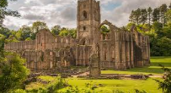
Nowhere is this grand-scale vision more apparent than at Fountains Abbey and Studley Royal in North Yorkshire. Preparation works are currently underway for Studley Revealed, a massive £4.6 million capital infrastructure project approved by planners to overhaul the entrance to this stunning UNESCO World Heritage site. Active onsite tasks include essential tree works, structure clearings, and erecting temporary fencing to secure the zone.
Once these preparatory steps are finished, full construction will begin with the complete teardown and replacement of the main admissions point, an expansion of accessible toilet facilities, and a complete rebuild of the Studley tea room into a highly sustainable, low-impact hospitality space. Far from being a dry engineering project, the Trust is keeping families at the center of the estate’s future by concurrently launching a major Pixar-themed outdoor play development on the abbey grounds, successfully merging world-class medieval archaeology with modern family engagement.
The South West Hub: Rewilding the Historic Footprint
In the South West, where dramatic coastlines meet historic parklands, the National Trust is turning its attention to healing the wider British countryside by leveraging its inland assets.
 Lanhydrock: The Wildflower Revival
At the Victorian estate of Lanhydrock in Cornwall, conservation efforts have extended far past the walls of the grand house. The estate has stepped up as a core inland partner for the Cornish Coastal Meadows Project. Here, rangers and dedicated volunteers are managing the complex cultivation, storage, and sewing of tons of native wildflower seeds. These seeds, harvested carefully from local donor meadows, are being used to transition acres of standard estate land back into highly bio-diverse priority grassland habitats. By restoring these lost meadows, Lanhydrock is actively supporting declining populations of pollinators, proving that the protection of natural heritage is just as critical as the preservation of bricks and mortar.
Conclusion: A Living, Breathing Heritage
The work unfolding across these regional hubs paints a clear picture of what the National Trust represents today. It is an organization that refuses to let history become static. Whether it is deploying advanced engineering to build accessible paths at Cliveden, painstakingly stitching 16th-century threads at Hardwick Hall, or rewilding acres of Cornish fields at Lanhydrock, the Trust proves that heritage is alive. By protecting the past while aggressively adapting to the environmental and social needs of the future, England's most treasured spaces remain resilient, relevant, and ready for tomorrow.
For further information visit www.nationaltrust.org.uk/building-conservation
Thanks to its membership the National Trust is able to protect special places for ever, for everyone - to become a member click here.
MTA appointed to deliver sustainable heating upgrades at National Trust properties
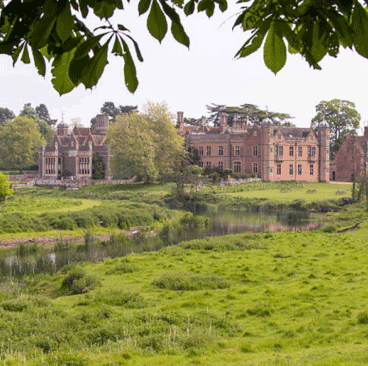
MTA was delighted to announce its appointment to undertake the refurbishment of heating systems at two significant National Trust properties, Charlecote Park and Berrington Hall.
Click here to find out more.
Light at Mompesson House
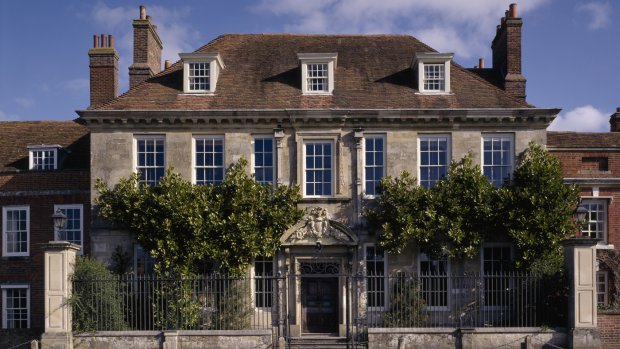
The daily opening of the shutters at Mompesson House in Salisbury floods the house with light - but how does this affect the collection? National Trust Consvervation Assistant Kate Vince looks at the different ways that light is monitored to protect the collection whilst still creating a wonderful experience for visitors.
Click here to find out more.
VISIT OUR ASSOCIATED SITES