

SEARCH OUR DIRECTORY
Tyddyn Street Church, Mold, Flintshire, North Wales by Richard King Systems
 This historic church built in the 1860's has been transformed in a renovation that has turned it into a community and arts centre as well as a church.
The intention is to attract people to the church as a centre for community activities, the arts and small business conferences.
The work has been carried out with funds from the sale of surplus property, fundraising and the support of a number of important grant funding organisations, including the rural regeneration agency Cadwyn Clwyd from the Flintshire Key Fund which aims to help bring new life to the community buildings of rural Flintshire.
United Reformed Church, Saltaire by Norman & Underwood
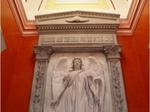 Saltaire village, a UNESCO World Heritage Site, was built by manufacturer and politician Sir Titus Salt in the 1850s around his new textile mill. His model village included houses, public buildings and a church to cater for the spiritual needs of his workers.
Norman & Underwood Conservation and Roofing divisions worked together to undertake various restoration works for this Grade 1 listed church, including reroofing the Mausoleum of Sir Titus Salt. The zinc panels had to be hand worked and folded on site by skilled craftsmen to ensure they matched the curvature of the stonework.
Protecting our buildings and our heritage – careful maintenance makes good sense
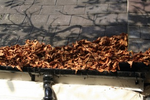 “It can prove to be an extremely costly over sight to neglect checking and regularly maintaining a building’s guttering system” warns Rainclear Systems’ Managing Director Geraint Jones. “After a property’s roof, a rainwater disposal system is one of the most critical features of a building which can both influence its unique character and ensure its care and preservation.
It’s a feature which can be easily overlooked, but at a building’s peril – especially an historic or listed building.” Designed to remove water from a building, leaking or inadequate guttering, hoppers and downpipes can lead to damaging internal and external conditions such as damp, flooding or dry rot – all potentially destructive and expensive to rectify.
Two-year project to restore the Great Gallery brings natural light to the Old Masters
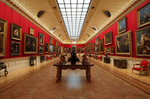 The Wallace Collection has reopened the stunning Great Gallery after a two-year rebuilding programme led by architects, Purcell.
The Great Gallery was originally built by Sir Richard Wallace between 1872-5 as part of his major extension of Hertford House to accommodate his collection’s move from Paris to London. As was typical for great private residences, the Gallery was positioned behind the private living quarters in order to create a magnificent impact at the culmination of any visit. Constructed over what had originally been a mews behind the house, the vast space would have been hugely impressive to the small groups of guests who were privileged enough to be shown the collection. It is now hugely impressive, once again.
Teamwork makes the most of a shared space
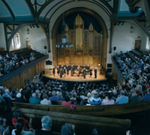 Across the Atlantic in Toronto, the world-renowned Tafelmusik Baroque Orchestra and Choir have for decades shared Trinity St Paul’s Church with the local congregation.
Tafelmusik approached SSD and AMPC to see what improvements could be made for music performance, acoustics, staging and sightlines.
Acoustic alchemy turns leaden surfaces into musical gold
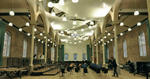 The history and stories to be found in heritage buildings have long provided inspiration for musicians and performers alike. However, modern standards of acoustics and technical systems demand that these spaces are upgraded. Such was the case at St Peter’s.
In the first phase of the project Sound Space Design (SSD) led a collaborative process to test the feasibility of converting the church to a permanent rehearsal venue with space to accommodate the largest ensembles of over 100 musicians and to include an audio monitoring room, acoustically isolated from the main space for professional quality recording.
Yorkshire companies aim to address heritage skills shortage
 The York Consortium for Conservation and Craftsmenship (YCCC) is an association of individuals and companies who are actively engaged in or support the conservation of built and artistic heritage and the craft skills necessary for its preservation. While most of the member conservators and crafts workers are based in the city of York and the surrounding area, their knowledge and skills are in demand locally, nationally and internationally.
One of the main aims of the YCCC is remedying the worrying and increasing shortage of the skilled craftsmen and conservators necessary to ensure the conservation and restoration of the nation’s heritage which they address through their charity raising funds for burseries and grants.
Tudor adds 'Weathered Earth' to its standard range of peg and plain tiles
 Tudor Roof Tile Co Ltd, Britain's foremost independent handmade clay roof tile manufacturer, has introduced a mellow earth tone into its standard range of peg and plain tiles.
Known as ‘Weathered Earth’, this subtle shade has a depth, which is ideally suited to restoration and heritage projects as it helps re-create the mature and time-worn appearance of clay tiles that have naturally darkened with age.
Dernier & Hamlyn - experts in the three R’s
 Alongside their skills in bespoke lighting manufacturing for heritage buildings, the talented team is often called on to refurbish, renovate and repair light fittings. Much of this work is extremely challenging and requires unique skills and in-depth knowledge of historic lighting.
Past projects have included taking down a chandelier weighing several tons for extensive refurbishment that included the manufacture of missing sections and castings as well as wiring to current electrical standards with energy efficient lighting being installed.
Window's musical theme honours church wardens' talents
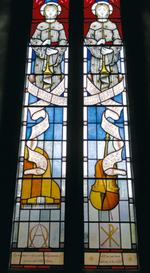 When the Church of St Edward the Confessor in Barnsley, South Yorkshire, decided to commemorate the lives and work of church wardens and music teachers George and Lily Stone, they commissioned YCCC member Mark Harvey of Park Glass Studios to create a new window.
The window consists of two slender lancet top main lights, with a single tracery light. Its main theme is music: celebrating the musical talents of the couple while connecting Christ and the church with song.
New chapter for Sewerby Hall
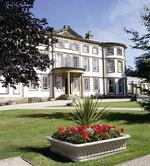 A team of craftsmen from Leeds-based specialist plastering firm Ornate Interiors have played their part in giving a new lease of life to a historic and popular East Yorkshire landmark.
Sewerby Hall is a Grade I listed Georgian country house that dates back to 1714. Set in 50 acres of landscaped gardens in the village of Sewerby near Bridlington, the venue attracts over 150,000 visitors annually and has recently undergone a comprehensive refurbishment with a range of plastering requirements forming part of the scope of works.
Specialist in sash windows can restore or replace with a perfect replica
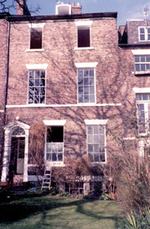 One of the established craftspeople appointed by Team Force for a number of its projects is sash window restoration specialist David Humble.
Based in Morpeth, in the south east corner of Northumberland, David and his team offer a complete renovation service for traditional sash windows which leaves them looking and performing like new.
A lighting requirement? One church's perspective
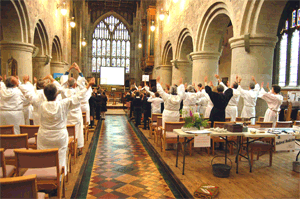 Considerations other than cost need to be made when engaging a contractor for a church lighting project.
Anthony J Smith (Gloucester) Ltd has recently completed a project to install new lighting throughout Great Malvern Priory which is part of the Greater Churches Network. The priory is a Grade I listed building and is a focal point both in Malvern and in the Diocese of Worcester.
ATLAS members maintain commitment to safety
 The latest annual accident survey undertaken by the Association of Technical Lightning and Access Specialists (ATLAS) demonstrates the high health and safety standards of its members in the workplace.
Despite operating in a high risk sector where working at height is unavoidable, ATLAS members recorded no fatalities for the fifth consecutive year and only one major injury, ensuring that the fatal and major injury rates were both lower than the construction industry as a whole.
New installation lights the way for pilgrims
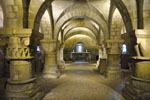 Lastingham in North Yorkshire has been a place of pilgrimage for centuries, its church having been founded by St Cedd of Lindisfarne as a monastery in AD 654. Following his death, 10 years later, he was buried beside the altar of the original church.
The founding of St Mary’s was described by the Venerable Bede and some of the decoratively carved Lastingham Stones date from the 8th century.
New exhibition at the London Canal Museum from 10 October
 Canals were a vital lifeline on the Western Front during the First World War, saving millions from starvation, carrying tens of thousands of wounded to safety and even taking injured war horses in the holds of barges for hospital treatment.
This untold story of human endeavour on a vast scale on the waterways of France and Belgium will unfold in a fascinating new exhibition opening at the London Canal Museum near King’s Cross on 10 October.
Verrier, profile of a Scottish restoration, design and maker of architectural and decorative glass
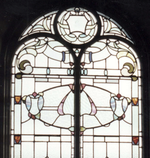 Verrier specialises in the design and making of architectural and decorative glass for domestic, and commercial settings. Leaded and kiln formed techniques are used to provide windows, wall hangings and decorative features.