

SEARCH OUR DIRECTORY
St Thomas the Apostle – battling the elements!
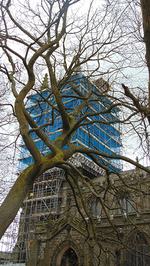 In January Stockport-based Aura Conservation Ltd were appointed to carry out the restoration of the Grade II listed 19th century parish church of St Thomas the Apostle in Heptonstall. The gothic style church stands alongside the ruin of the previous 13th century Church of St Thomas à Beckett with three adjacent churchyards.
Gutters ready for Autumn?
 Every November SPAB (The Society for the Protection of Ancient Buildings) promote ‘Maintenance Week’ to encourage us to take a look at the buildings we are responsible for and consider spending a little time and money on their care. After all, we all expect regular maintenance checks to keep our cars in good shape – so why not our homes?
Gutters protect our buildings – our most valuable assets, whether ancient or not - Gutters manage the flow of rainwater away from our roofs, walls and foundations keeping them dry and preventing costly damage/repairs.
Seating guidance from ChurchCare
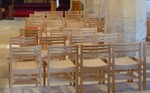 One of the most frequent changes made to churches today will involve seating in some way. Changing seating inside a church can have a significant impact upon the interior. The process of changing furniture, as well as choosing a suitable alternative, requires careful consideration. ChurchCare publish a document intended to guide parishes through the planning stages and the decisions involved.
The decision to remove pews should be made on a case by case basis following careful assessment of significance, needs and impacts. If the decision is taken to replace existing seating in a historic church building, then the Church Buildings Council aspires to seeing replacement chairs or benches of the highest quality of design.
Calling all northern-based users of rolled lead sheet and hard metals
 The LSA is going to be running some half day CPD certified seminars in the North of England this autumn. These lead and hard metal seminars are some of our most popular courses and are aimed at anyone involved in the surveying, specifying or installation of rolled lead sheet/traditional hard metals in the construction industry.
Two venues have been selected, one near Wetherby and one in Wigan, to help cover as wide a catchment area as possible.
York Handmade provides 30,000 bricks for new chapter in Halifax library’s story
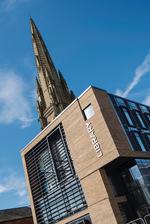 The award-winning York Handmade Brick Company has provided 30,000 bricks for the new multi-million Central Library and Archives in Halifax, which officially opened on Saturday September 9th.
About 30,000 specially-manufactured bricks make up the walls of the new building.
Tried, tested and repeatedly requested
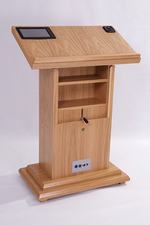 Fullers Finer Furniture have been making their renowned height adjustable Canterbury and York Lecterns since 2001. Demand for these popular lecterns continues. Fullers Finer Furniture put the continued demand down to a number of factors.
Timbers show their age, but with a certain polish
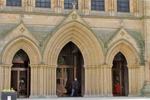 York restorers and conservators Andrew G Podmore & Son were delighted to be entrusted with the conservation of the great west doors at Ripon Cathedral. The work was carried out under the expert guidance of architect Oliver Caroe.
As with all restoration, it was paramount that the evidence of the timber’s age on the doors’ surface be conserved and this involved careful cleaning of the internal surfaces which can be seen as a matrix frame construction in a harlequin pattern. When the frame was cleaned and the accumulated soot and dust removed, remnants of an original waxed finish were found.
The heating mastermind finds time for CRE in a busy schedule
 The return of CRE to Sandown will be accompanied by an equally welcome return of an exhibitor who has seen as many CRE shows as the racecourse itself.
Stoke-on-Trent heating company Mellor and Mottram are one of the foremost specialist installers of heating systems for churches in the UK. From their origins in the commercial market in the 1970s the company has honed its expertise in the complex church sector to a fine degree.
Did you know you can now order aluminium coping online from Rainclear?
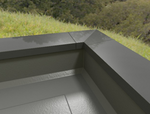 Skyline from Alumasc offers top of the range roof edge details to suit all designs and budgets. Skyline systems are manufactured from high quality, polyester coated aluminium by a manufacturer with 50 years of product manufacturing experience so you can expect high precision detailing, welding and finishing.
And NOW you can select and pay for these quality products online from Rainclear Systems the UK’s leading stockist and online retailer of metal rainwater and roofline systems.
The Skyline aluminium coping system has a hidden strap fixing method which avoids penetration of the capping, whilst allowing ventilation over the top of the wall.
Noel Coward telegram found in Agatha Christie Bureau
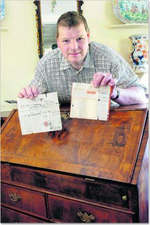 Cotswolds furniture restorer Clive Payne made a unique discovery whilst restoring an early 18th century bureau which had been bought from the estate of Agatha Christie. The bureau, which had been brought in by a private client, had been sitting in Clive’s workshop for 3 years before he began work on it.
Precision made, premium quality, handmade bricks by Charnwood
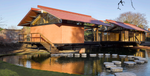 Known as the UK’s largest producer of traditionally handmade bricks and specials, produced from its manufacturing base in Leicestershire, Charnwood combines the highest durability characteristics with the ability to tailor bespoke products to your exact specification to produce a premier finish. Two recent unique projects have used quality, premium Charnwood products to form inspiring architecture that encompass distinctive designs.
Stepping Stone House, in Hurley, is a 150sqm multi-room garden house extension located in the grounds of Hurley Manor House. Shortlisted for a RIBA South Regional 2017 Award, architecture practice ‘Hamish and Lyons’ has accomplished a beautiful design, which seeks to embrace the essence of nature using organic structure, natural materials and daylight.
Historic church rises from the ashes
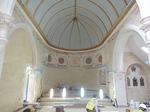 In March 2010 arsonists torched the historic 19th century St Mary’s Church at Westry in Cambridgeshire, leaving it almost completely destroyed with only the four main walls left standing.
Its road to recovery was long and at times uncertain. Indeed it took much fundraising just to enable the church to properly assess the damage. From there detailed plans were developed and the necessary permissions sought before the restoration was finally able to take place.
To ensure the church was returned to its former glory it was imperative that the restoration was carried out using the correct traditional building materials.
WES+ wireless fire alarm system gives maximum protection during building work
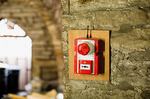 The danger of fire in ecclesiastical and other heritage buildings becomes particularly acute when building or refurbishment work is being undertaken. A major concern is that most building work in churches is undertaken while it remains fully functioning. In those situations, not having a fully compliant fire alarm system can result in unnecessary risks to the congregation and other building users.
Paul Henson, sales and marketing director at Ramtech Electronics, explained: “Fire in our ecclesiastical and heritage buildings is an ever-present danger. These types of structures are particularly vulnerable during refurbishments or new build work due to the presence of flammable materials and hot works.”
Fire safety in ecclesiastical and heritage buildings
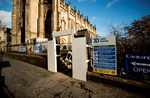 Paul Henson, Sales and Marketing Director at Ramtech Electronics, explores how guardians of our ecclesiastical and heritage buildings can set a benchmark for fire safety by specifying an EN 54 compliant temporary fire alarm systems.
“Fire in our ecclesiastical and heritage buildings is an ever present danger. These types of structures are particularly vulnerable during refurbishments or new build work due to the presence of flammable materials and hot works’’
The resulting damage from a fire does not stop at physical property loss. A major concern is that most of the building work is undertaken whilst the church remains fully functioning. In these situations, not having a fully compliant fire alarm system can result in unnecessary risks from a fire to the congregation and other building users.
An additional factor to consider is that several of the leading insurers to the ecclesiastical and heritage sector require that adequate consideration is given to fire during any building work. However, it is not prescriptive on what ‘adequate’ means. Subsequently it complies that the fire alarm system meets EN54 as standard.
Lancashire company flying the flag for construction at Westminster event
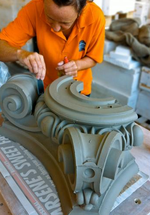 An award winning Lancashire business, Darwen Terracotta, has been invited to feature in the prestigious Parliamentary Review and attend an exclusive reception at the Palace of Westminster on September 18. Participation is by invitation only, enabling selected companies to meet leading politicians and advance the cause of manufacturing and construction.
The company was started in 2015, following the closure, after more than 100 years, of the architectural ceramics division of another local business. Producing terracotta and glazed ceramic cladding – faience – the company has grown rapidly, with products being used on both building restoration and in new projects.
Light at Mompesson House
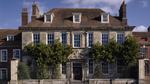 The daily opening of the shutters at Mompesson House in Salisbury floods the house with light - but how does this affect the collection? National Trust Consvervation Assistant Kate Vince looks at the different ways that light is monitored to protect the collection whilst still creating a wonderful experience for visitors.
My first job in the morning is to open the shutters of the house. This lets the light flood the rooms and brings the house to life. I do a room at a time, clean it, then shut the shutters back down and plunge the house into darkness once more. This stops light from damaging the collection.
Light is an agent of deterioration and as such is monitored throughout the house. Viewing the collection in daylight is a joy but it has been well understood for centuries that light, particularly daylight, can cause objects to deteriorate. This damage is irreversible and cannot be rectified by conservation treatments.
National Trust building conservation programme
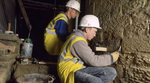 The National Trust protects historic buildings and buildings in the wider landscape. Their team works hard to ensure they are preserved for ever and for everyone, using traditional conservation techniques.
Our special places need a lot of looking after and you can read more about some of our most ambitious conservation and restoration projects in the next issue of this magazine. Ecclesiastical and Heritage World’s Autumn issue will feature a spotlight on the National Trust Restoration Programme with case study examples of some of the magnificent conservation and restoration successes old and new. Support and contributions from specialists nationwide is welcome.