




Current Issue

Heritage Roofing
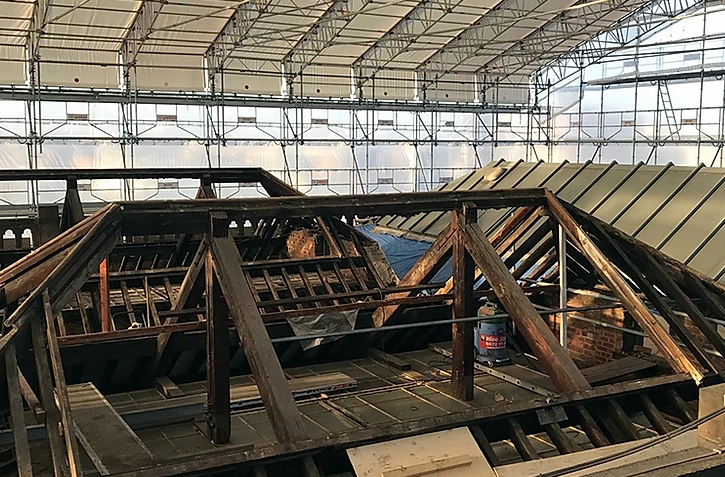
Heritage roofing - maintaining our iconic buildings
The UK is home to some of the most iconic buildings in the world, from stunning churches and cathedrals to historic stately homes. Each and every one of these remarkable feats of architecture requires regular maintenance to ensure they remain in the very best condition, allowing them to be enjoyed for generations.
Cathedral Care
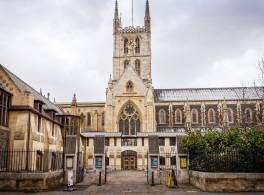
Restoration and upkeep of cathedrals
There are some 42 Anglican cathedrals in the UK, not to mention 20 or so Catholic cathedrals. Cathedrals form the most important collection of historic buildings in England. The largest and most ancient are internationally famous, the smallest are usually among the most significant buildings in their region and even the most recent are architectural masterpieces.
Master Craftsmen
Championing our heritage with modern craftsmanship
Twenty years ago, English Heritage (now Historic England) published its first-ever Register of Buildings at Risk across England, which featured nearly 2,000 buildings and monuments that were ‘neglected, broken and unloved’. Recently Historic England was delighted to announce that over two-thirds of those buildings were now safe, in both urban and rural areas right across the country.
Lightning Protection

When lightning strikes are you protected against this act of God?
The issue of lightning protection in churches is one that has exercised this publication for many years. In this four-part series of spotlights on the issue we will be revisiting various aspects of the subject, beginning with an overview of current thinking.
Traditional Lime
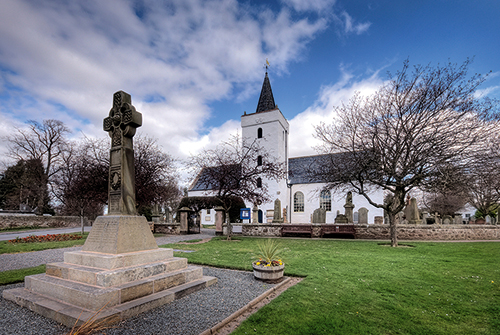
Lime: it’s better for buildings – and for the environment
It is now fairly well known that cement is not good for old buildings and that lime mortar should be used. But why? What are the advantages and what are the disadvantages? In order to begin to answer those questions it is necessary to understand the nature of traditional building, the process by which buildings used to be built, and how it differs from modern construction, the process by which we build today.
Audio Visual
Audio visual equipment in church buildings
This guidance is issued by the Church Buildings Council under section 55(1)(d) of the Dioceses, Mission and Pastoral Measure 2007. As it is statutory guidance, it must be considered with great care. The standards of good practice set out in the guidance should not be departed from unless the departure is justified by reasons that are spelled out clearly, logically and convincingly.
Read More...







Heritage Funding
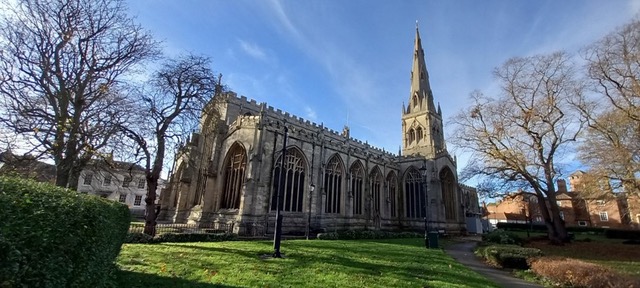
£48m heritage funding opens for churches and historic buildings
Part of £1.5 billion government investment in cultural organisations over a five-year period
Thousands of churches and historic buildings across England could benefit from a major new £48 million funding package aimed at urgent repairs, regeneration projects and wider community use.
CRE Events

Christian Resources Exhibition enters a new chapter as Church Resources Exhibition
The Christian Resources Exhibition (CRE), the UK’s largest church-related show, has changed hands in its 40th year and has been taken over by Quartz Business Media.
Insurance
You need to ensure that reasonable precautions are in place at your church to keep it safe for those who use it. To do this, you need to think about what might cause harm to people.
You will then need to decide if the precautions already in place are adequate. If they are not, you may need to identify further action to prevent any danger. When done formally, this is known as a risk assessment.
Church Maintenance
Church maintenance and repair: Calendar of Care
Just as prevention is always better than cure, maintenance is preferable to major repairs. But, such repairs may not always be avoidable. Church Care offers a monthly guide in our coming issues Starting in Spring
We can help you understand the common problems and areas that need your special attention, and give you tips for regular maintenance schemes.
Pest Control
Michael Palin warns of pest threat to churches
Michael Palin is supporting the future of the UK’s historic churches and chapels with a voiceover for a new animated film. The 80 second animation, produced for the National Churches Trust, highlights why churches are some of the nation’s best loved buildings.
Town Halls
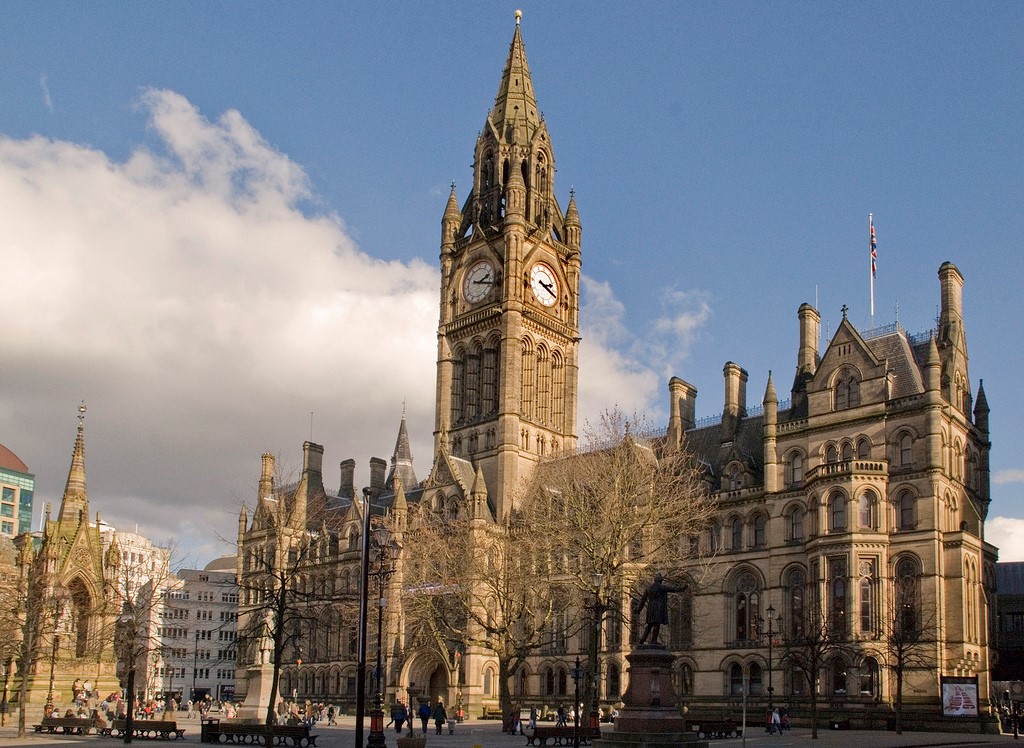
The history of the great Victorian Town Halls of Northern England
From industrial squalor to civic pride, the story behind some of the most impressive buildings of the North involve a unique mix of economics, grand designs and noble sentiments within communities.
Lead Roofing
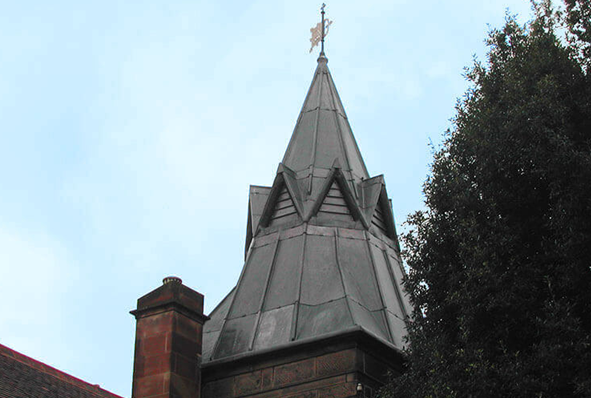
Lead is one of the oldest materials in the roofing industry and is still commonly used throughout the world today.
Lead roofing is a traditional roofing method which has been used in the industry for hundreds of years, and is therefore proven to be extremely reliable. Lead roofing, and sand-cast lead, in particular is ideal for old buildings such as churches or historical renovations, whereas milled lead roofing is a mass-produced alternative, used for precision and accuracy in homes and commercial buildings alike.

SEARCH OUR DIRECTORY
Conservation principles for heritage forged and cast ironwork
 Using the NHIG Conservation Principles will help ensure high standards and appropriately carried out work.
The principles are for use by all those involved with heritage ironwork projects including:
- Custodians when commissioning work, to select the right people to work with by ensuring they implement the NHIG Conservation Principles for all their restoration work.
- Professionals when specifying work, to ensure good and appropriate work by including the NHIG standards within tender documents.
- Practitioners when promoting their services and tendering for work, to demonstrate knowledge, understanding and importantly the standard they work to regards all their restoration work.
The Conservation Principles are intended to inform and guide decisions at all stages of conservation work to forged and cast iron; they provide a comprehensive and ethical framework around which informed judgements and decisions can be made. Throughout the development process NHIG’s aim has not been to invent something new, but to aid the practical interpretation and application of universally accepted general conservation principles by making them specifically relevant to ironwork. Uniquely, NHIG’s principles expand on the philosophy in order to improve understanding.
Surprisingly, ironwork was the one area of conservation where no specific codes of practice existed which is why NHIG felt it was so important to develop the Conservation Principles document. It has long been felt that while conservation is important, good conservation is essential.
The principles set a standard of practice for those who provide advice, make decisions about or undertake work on heritage forged and cast iron work, not only practitioners and specifiers but also owners, managers and custodians. The purpose of standardising practice is to ensure consistency and make sure that the significance of the work carried out is fully appreciated and that those involved are accountable for the work they do.
The ‘core principles’ of conservation are stated in order to provide a clear ambition and expectation. While these are aligned with universally accepted conservation principles the uniqueness of the NHIG conservation policy is that it goes on to expand the philosophy behind these principles, as ‘best practice’, in order to improve understanding on how they specifically apply to forged and cast ironwork. The conservation policy should be read and referred to as a whole and while self-contained it should be noted that the standards of other conservation organisations may also be relevant.
As with other conservation policies NHIG’s Conservation Principles document is concise as its role is to clearly convey aims and objectives. It does not include lots of detail or guidance, since this would detract from the principle concept and make it too complex to be useful. Instead further practical guidance will be kept separate and provided as supporting documents. Therefore the guidance given for each of the fifteen points listed under good practice has been purposely kept between 50 and 300 words.
In conclusion it is important to appreciate that ‘core principles’ and ‘best practice’ are essentially ‘aspirational’ in stating ideals both for what should be aimed at and what should be achieved. It is therefore essential to adopt a flexible approach to their interpretation, in order to determine how best to apply them to the individual circumstances of any given case or location.
The NHIG ironwork conservation principles were carefully developed, following a process which included two public forums and a peer review process. The Peer Review panel was chaired by Rory Cullen, Head of Buildings for the National Trust, and he was joined by Katy Lithgow, Head Conservator for the National Trust; Kate Gunthorpe, Senior Building Surveyor for English Heritage; Deborah Cane, ICON representative; Ali Davey of Historic Scotland; Rupert Harris of Rupert Harris Conservation and Dr Bruce Induni, SPAB representative.
The Working Group was chaired by Geoff Wallis, proprietor of Wallis Conservation and former Director of Dorothea Restorations Ltd; he was joined by Elizabeth Green, Curator for The National Trust; Bethan Griffiths, Director of The Ironwork Studio; David James, Director of George James & Sons Blacksmiths; Adrian Legge, Senior Blacksmithing tutor for Hereford College; Andrew Naylor, Director of Hall Conservation; Chris Topp, Director of Chris Topp & Co Ironworks.
The NHIG Conservation Principles document has been endorsed by the National Trust, English Heritage, Icon, The Worshipful Company of Ironmongers and BABA.

To find out more about the NHIG visit www.nhig.org.uk
VISIT OUR ASSOCIATED SITES