




Current Issue

Olympic dig unearths ‘unknown London’
A flint axe over 4,000 years old was the cream of a crop of discoveries during a two-year archaeological investigation into the past of London’s Olympic Park. Archaeologists believe the unfinished prehistoric axe was placed in waterlogged ground on purpose, giving a unique insight into the first eastenders that lived and hunted in the area.
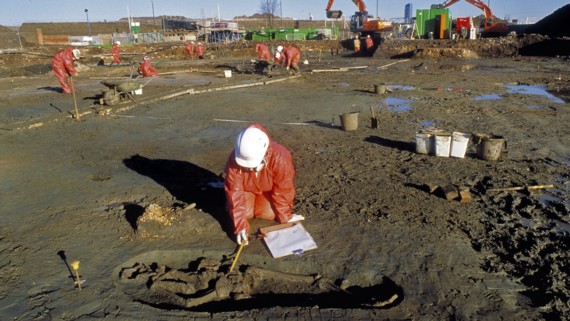
The UK’s largest-ever archaeological investigation saw over 140 trenches dug on the 2.5km2 site – carried out before construction work began on the stadium and associated facilities.
Archaeological finds included four prehistoric skeletons buried in graves around an area of Iron Age settlement (pictured), a Roman coin, Roman river walls, medieval and neolithic pottery, Second World War gun emplacements and a complete 19th-century boat used for hunting wildfowl on the lower River Lea.
Over 1,000 people living in the five ‘host boroughs’ have already seen the finds first hand and learned the important past of the area through a programme of talks, community events and roadshows. The Discover project was organised by the Olympic Delivery Authority and the Museum of London.
Following analysis of the fieldwork, the Museum of London will detail the investigations and finds in a publication, currently expected to cover two volumes.
ODA chairman John Armitt said: “It has been a huge logistical exercise to detail the past of the Olympic Park, to enable the ‘big build’ of the venues and infrastructure to start on track. Archaeologists and local people have had the opportunity to learn more about the development of Lower Lea Valley and the people that have lived here for thousands of years before it is transformed for future generations.”
Museum of London Archaeology senior archaeologist Kieron Tyler said: “As our analysis progresses an exciting new story is beginning to emerge. We now know that the Olympic Park area was settled and utilised continuously from the prehistoric period onwards. These people lived and died here. This new story of the Lea Valley is London before London – a previously unknown London.”
VISIT OUR ASSOCIATED SITES