Museums Association Green case study
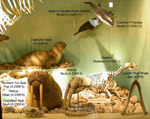
Manchester Museum has been in its present Victorian building near the city centre since 1888. Part of the University of Manchester, it employs 94 members of staff. Its environmental control systems are relatively efficient, following a major refurbishment project between 1999 and 2003, but it is improving them in line with its objective to ‘put sustainability at the heart of its operations… and to contribute to the sustainability agenda through its own practice.’
In addition, the university introduced sub-metering of energy supplies so that end-users, including the museum, could be charged for their energy use. Nigel Thompson, the museum’s assistant director, says a Carbon Trust survey gave an overall picture of annual energy consumption for the first time. Recommendations for reducing energy use included better control of the environment and lighting; staff training and awareness-raising; improved procedures for out-of-hours shut-down of building services; time-switches to local hot-water heaters deployed round the museum; and occupancy sensors to control lighting in WCs.
The museum commissioned environmental charity Global Action Plan to help, working together with the university’s Whitworth Art Gallery and the John Rylands University Library. Examples of Global Action Plan initiatives to change staff behaviour include:
• Small rewards (such as chocolate bars) for staff who turned their computers off before leaving work
• Better provision for recycling
• Green Days to promote energy efficiency, encourage waste reduction, and gather ideas and feedback.
Current plans to embed sustainability involve:
• A cross-departmental team to promote environmental sustainability
• Departmental annual operating plans that include sustainability targets for procurement, travel and waste management
• Annual audits of departmental performance
 Planned infrastructure improvements include shared office printing facilities and the gradual replacement of tungsten and tungsten-halogen lighting with light-emitting diodes (LEDs). Thompson says £6,000 spent on LEDs in one of the galleries could result in annual savings of £5,000 in energy costs and £3,000 in maintenance and lamp replacement costs – equivalent to a pay-back period of just nine months.
The 2007 Carbon Trust survey calculated the museum’s annual CO2 emissions to be 800 tonnes. By 2011 the museum wants to reduce it to less than 500 tonnes, cutting energy consumption and the amount of waste it sends to landfill by 40%.
Web links:
www.manchester.ac.uk/museum
www.globalactionplan.org.uk
www.carbontrust.co.uk
Manchester is the venue for this year’s Museum Association Conference and Exhibition (October 4th to 6th)www.museumsassociation.org