




Current Issue
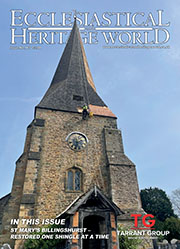


Heritage Roofing
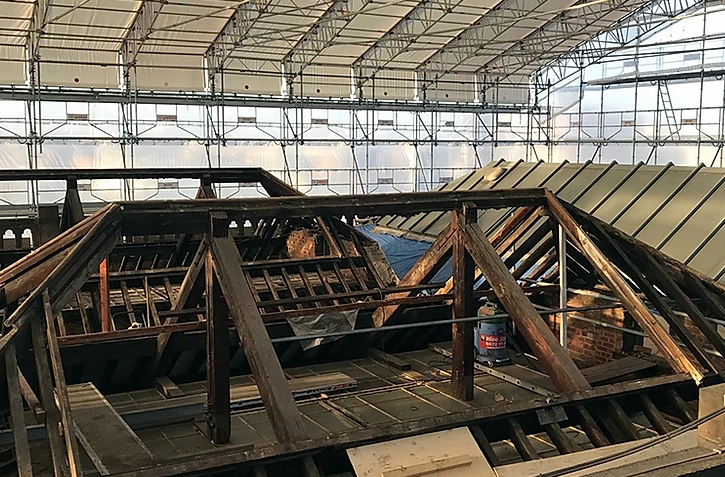
Heritage roofing - maintaining our iconic buildings
The UK is home to some of the most iconic buildings in the world, from stunning churches and cathedrals to historic stately homes. Each and every one of these remarkable feats of architecture requires regular maintenance to ensure they remain in the very best condition, allowing them to be enjoyed for generations.
Cathedral Care
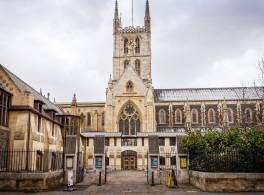
Restoration and upkeep of cathedrals
There are some 42 Anglican cathedrals in the UK, not to mention 20 or so Catholic cathedrals. Cathedrals form the most important collection of historic buildings in England. The largest and most ancient are internationally famous, the smallest are usually among the most significant buildings in their region and even the most recent are architectural masterpieces.
Master Craftsmen
Championing our heritage with modern craftsmanship
Twenty years ago, English Heritage (now Historic England) published its first-ever Register of Buildings at Risk across England, which featured nearly 2,000 buildings and monuments that were ‘neglected, broken and unloved’. Recently Historic England was delighted to announce that over two-thirds of those buildings were now safe, in both urban and rural areas right across the country.
Lightning Protection
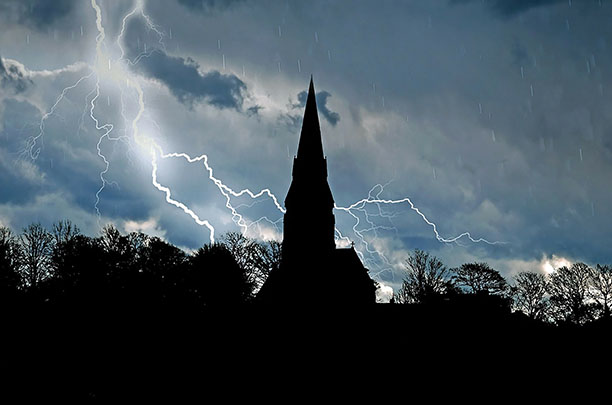
When lightning strikes are you protected against this act of God?
The issue of lightning protection in churches is one that has exercised this publication for many years. In this four-part series of spotlights on the issue we will be revisiting various aspects of the subject, beginning with an overview of current thinking.
Traditional Lime
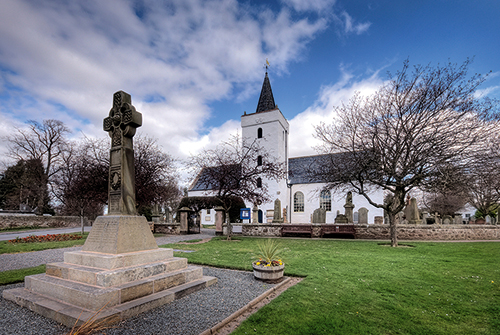
Lime: it’s better for buildings – and for the environment
It is now fairly well known that cement is not good for old buildings and that lime mortar should be used. But why? What are the advantages and what are the disadvantages? In order to begin to answer those questions it is necessary to understand the nature of traditional building, the process by which buildings used to be built, and how it differs from modern construction, the process by which we build today.
Audio Visual

Audio visual equipment in church buildings
This guidance is issued by the Church Buildings Council under section 55(1)(d) of the Dioceses, Mission and Pastoral Measure 2007. As it is statutory guidance, it must be considered with great care. The standards of good practice set out in the guidance should not be departed from unless the departure is justified by reasons that are spelled out clearly, logically and convincingly.
Read More...







Heritage Funding
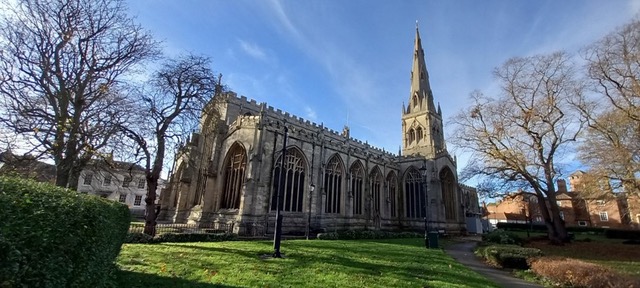
£48m heritage funding opens for churches and historic buildings
Part of £1.5 billion government investment in cultural organisations over a five-year period
Thousands of churches and historic buildings across England could benefit from a major new £48 million funding package aimed at urgent repairs, regeneration projects and wider community use.
CRE Events

Christian Resources Exhibition enters a new chapter as Church Resources Exhibition
The Christian Resources Exhibition (CRE), the UK’s largest church-related show, has changed hands in its 40th year and has been taken over by Quartz Business Media.
Insurance
You need to ensure that reasonable precautions are in place at your church to keep it safe for those who use it. To do this, you need to think about what might cause harm to people.
You will then need to decide if the precautions already in place are adequate. If they are not, you may need to identify further action to prevent any danger. When done formally, this is known as a risk assessment.
Church Maintenance
Church maintenance and repair: Calendar of Care
Just as prevention is always better than cure, maintenance is preferable to major repairs. But, such repairs may not always be avoidable. Church Care offers a monthly guide in our coming issues Starting in Spring
We can help you understand the common problems and areas that need your special attention, and give you tips for regular maintenance schemes.
Pest Control
Michael Palin warns of pest threat to churches
Michael Palin is supporting the future of the UK’s historic churches and chapels with a voiceover for a new animated film. The 80 second animation, produced for the National Churches Trust, highlights why churches are some of the nation’s best loved buildings.
Town Halls
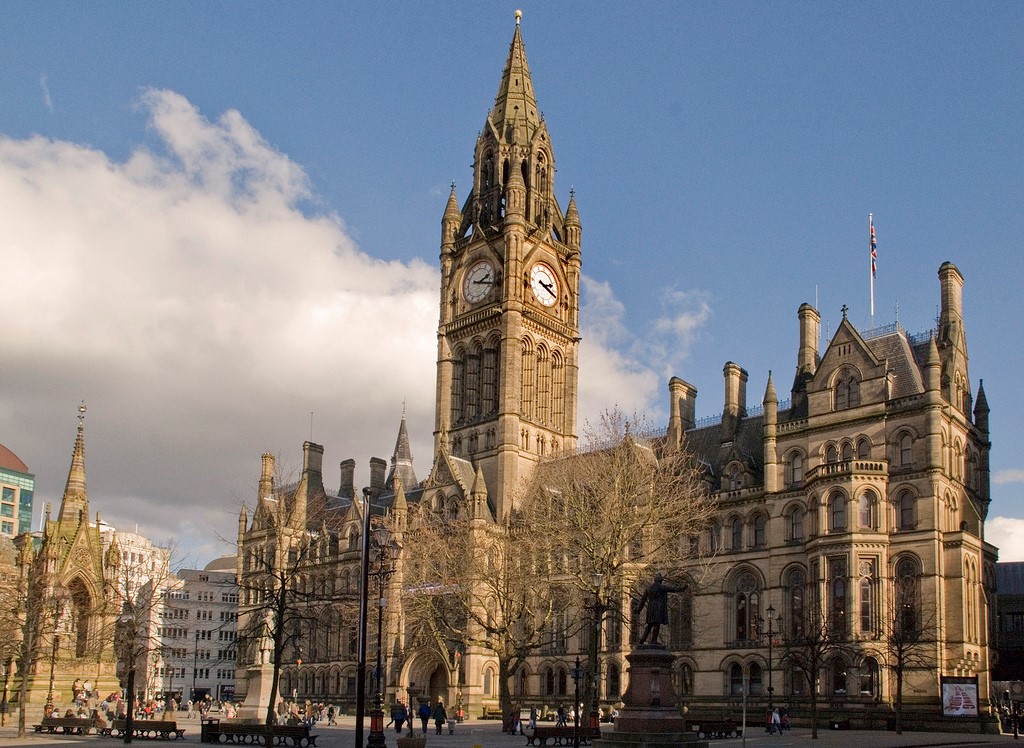
The history of the great Victorian Town Halls of Northern England
From industrial squalor to civic pride, the story behind some of the most impressive buildings of the North involve a unique mix of economics, grand designs and noble sentiments within communities.
Lead Roofing
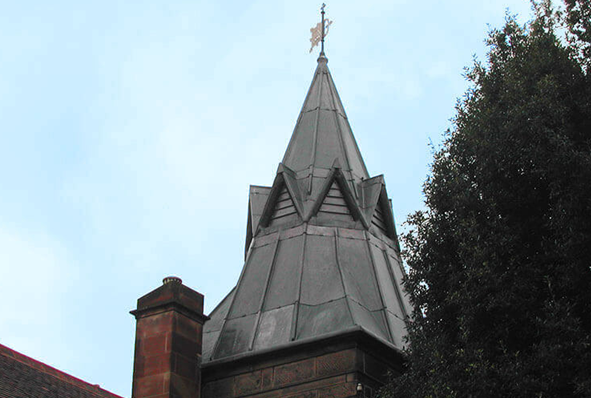
Lead is one of the oldest materials in the roofing industry and is still commonly used throughout the world today.
Lead roofing is a traditional roofing method which has been used in the industry for hundreds of years, and is therefore proven to be extremely reliable. Lead roofing, and sand-cast lead, in particular is ideal for old buildings such as churches or historical renovations, whereas milled lead roofing is a mass-produced alternative, used for precision and accuracy in homes and commercial buildings alike.


SEARCH OUR DIRECTORY
Manchester Museum - New gallery Opens
NEW GALLERY OPENS AT THE MANCHESTER MUSEUM EXPLORING CONNECTIONS BETWEEN MANCHESTER, ITS PEOPLE AND THE MUSEUMS COLLECTION
The Manchester Gallery reveals the amazing stories behind some of The Manchester Museum’s most fascinating objects. Uncover the connections between the city, its people and the Museum in this new gallery opening on 4 April.
Many of the stories and journeys behind the objects in The Manchester Museum’s collection mirror the journeys of people and communities that have travelled to Manchester. Presented through the Gallery’s five main themes (Journeys, Migration, the Museum, Collectors and the Environment), these stories explore the Museum’s history and Manchester’s changing environment - from an underwater world full of coral reefs; a swamp which deposited the coal that fuelled the industrial revolution; a desert and an ice age, to an urban metropolis. The displays also uncover The Manchester Museum’s changing relationship with the city – from its Victorian beginnings to the modern day – and highlight the people behind the Museum’s collection, from working class to wealthy collectors, academics and British soldiers.
The Manchester Gallery will feature seven special ‘objects in focus’ including Maharajah, an Asian elephant that walked 200 miles from Edinburgh to Manchester in 1872, where he became the star attraction at Belle Vue Zoo providing rides for visitors; a table from Benin City taken as loot and sold to pay for the capture of the city by British Forces in 1897; a Roman Altar found in a Roman rubbish pit in Manchester earlier last year during building excavations and a set of jars containing samples taken from the HMS Challenger oceanographic research expedition across the world in 1872.
The Gallery also highlights the stories of many of the Museum’s early collectors including Marie Stopes, a twentieth century social reformer and pioneering palaeobotanist who was the first woman to be employed to the scientific staff at The University of Manchester, (formerly Owens College). The private collections of Victorian entomologist Mr. Sidebotham and Egyptologist Professor (Sir) William Flinders Petrie, amongst others, also formed the basis of The Manchester Museum’s collection. The Museum’s current staff and collectors, particularly Dr Dmitri Logunov, Curator of Arthropods and Dr David Green, Curator of Mineralogy and Petrology bring that history up to the present day.
The Manchester Museum has been working closely with Abbey Hey Primary School and Gorton Local History Group to develop ideas around the content for the Manchester Gallery. This involvement came through the Our City project, which made connections between local schools, community groups and the Museum’s collections. The children’s artwork told the history of Gorton past and present culminating in an exhibition at Gorton Library. Their work in Gorton has helped to create this fascinating gallery.
The Manchester Gallery has been made possible through the generous support of Renaissance North West and the DCMS/Wolfson Foundation Museums & Galleries Improvement Fund.
Extended Information: ‘Objects in focus’
Benin Table
Determined that his kingdom would not become a British colony, the Oba Ovonramwen (king) of Benin City in Edo State, Nigeria, boldly ignored a treaty with the British as they attempted to undermine his rule in 1892. In 1896 the British tried to capture Benin City, but failed. There was a second attempt in 1897 called the ‘Benin Punitive Expedition’. The city was ransacked forcing the Oba into exile. In order to pay for the cost of the ‘expedition’ British soldiers looted over 2500 objects and sold them throughout the world. The Benin Table is one of those objects.
‘British Entomology’ by J Curtis
The Museum’s entomology (insect) collection contains very few specimens that are as rare and as valuable to scientists and historians as the ‘Manchester Moth’. Scientist John Curtis first described the ‘Manchester Moth’ in the sixth volume of the first edition of his book ‘British Entomology’, which was published in 1830. There are only two other specimens of this moth in the world; one in London and a second in Melbourne, Australia.
The ‘Manchester Moth’ was given its name because it was a new species discovered in the city. Approximately 50 specimens were collected on Kersall Moor in June 1829 by insect collector Robert Cribb. Unfortunately, the store-box containing the specimens was destroyed by Cribb’s angry landlady as he had not paid his rent. Only three moths survived. The Manchester Moth is an unsolved scientific mystery because no-one has found any new specimens since 1829. Entomologists believe that the species does not occur outside Britain and is probably now extinct.
HMS Challenger Expedition Samples
On 21 December 1872 a steamship named HMS Challenger sailed from Portsmouth to undertake a scientific and surveying voyage of the world's oceans. This knowledge was important because the first telegraph cables were being laid under the sea, connecting Britain to its colonies around the world. Over the next four years, Challenger covered 68,890 nautical miles (110,224 kilometres). The Challenger expedition marked the beginning of the science of oceanography. Almost 5,000 new species of marine life were discovered by the scientists on board. Thousands of these individual bryozoa (small encrusting animals that live in colonies) specimens are now in the Museum’s possession.
Maharajah, Asian Elephant
The story of Maharajah begins in 1872, when he arrived in Edinburgh as part of a travelling circus. While in Edinburgh, Mr. Alexander Fairgreave, the owner of Maharajah's circus decided to retire, selling all the circus equipment and animals. Maharajah was sold for £680 pounds during the auction to James Jennison, the owner of the Belle Vue Zoo in Gorton, Manchester. Eight years old at the time, he stood at over two metres tall with very impressive 20-inch tusks. In April 1872, Maharajah was boarded onto a horse carriage on the train headed for Manchester. Before the train left, Maharajah began to get distressed and uneasy, so his keeper Lorenzo Lawrence decided to walk the 200 miles from Edinburgh to Manchester, a journey which took ten days. Several famous stories have been told about this incredible journey. One of them recalls that during the trip, Lorenzo Lawrence and Maharajah came upon a tollgate keeper. The two men could not agree as to how much an elephant should pay to go through the gate, so Maharajah settled the dispute himself, by opening the gate with his trunk. Although no evidence of this incident actually exists, the story was captured in a painting by Hayward Hardy, which can be seen on display at Manchester Art Gallery. Maharajah lived in Belle Vue Zoo for ten years where he was a popular performer, participating in many parades in Manchester. He is believed to have died of pneumonia at the age of 18. His skeleton was displayed at Belle Vue Zoo for many years, until it was donated to the Museum.
Manchu Head-dress
Once worn by a Manchu Noble person, the Manchu head-dress is over 60 years old and was donated to the Museum in 1939 by Mrs Wood-Jones, who bought it in China. The Manchu people originally came from a part of North-East China called Manchuria, but they have since migrated throughout China and settled across the world. A Manchu clan called Aisin Gioro founded the Qing Dynasty, which ruled China for more than 250 years from 1644 to 1912. This was China’s last ruling dynasty before the revolution and the establishment of the Chinese Republic.
Manchu people are recognised as an ethnic minority in modern China, where the Han people have the most cultural and political influence. Today many people in China have Manchu ancestry, but the Manchu language is not widely spoken. There has recently been a renewed interest in exploring Manchu culture within China. New laws protecting ethnic minorities have encouraged people to take pride in their Manchu heritage.
Red Deer Antlers, Manchester Ship Canal
The skull and antlers from a male Red Deer were found at Barton, Manchester, when the Manchester Ship Canal was being dug in the 1890s. Red Deer lived in ‘Manchester’ at the end of the last Ice Age, 10-12,000 years ago. When Manchester’s climate became warmer at the end of the Ice Age, the deer migrated north out of the area.
Roman Altar
Found lying face down in a Roman rubbish pit, the Roman Altar was discovered by archaeologists during a dig in Manchester in the summer of 2008. As a result of its protection, the Latin inscription on its surface is still very clear. The English translation reads: ‘To the mother goddesses of the Cannanefates and of all peoples, Aelius Victor gladly, willingly and deservedly fulfilled his vow’.
Aelius Victor probably served in the Roman army. Because he names the Cannanefates in the dedication on the altar, he is thought to be a member of that tribe. The Cannanefates were a Germanic people who lived near the mouth of the Rhine in the Roman province of Lower Germany.
VISIT OUR ASSOCIATED SITES