




Current Issue
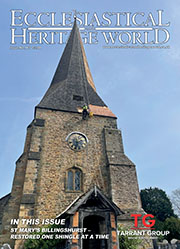

Heritage Roofing
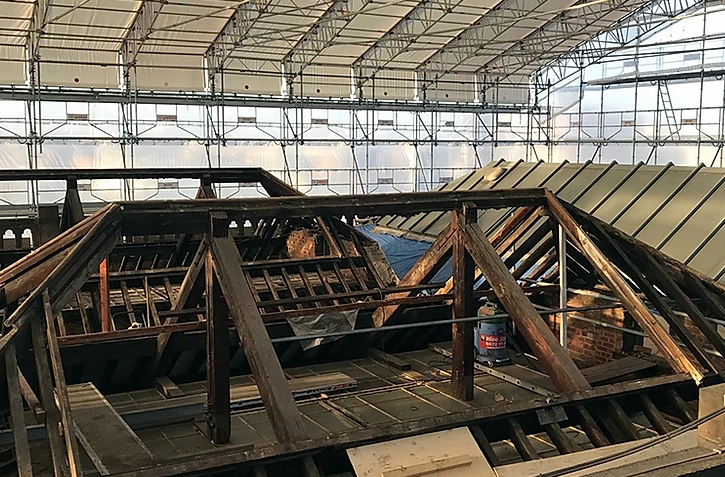
Heritage roofing - maintaining our iconic buildings
The UK is home to some of the most iconic buildings in the world, from stunning churches and cathedrals to historic stately homes. Each and every one of these remarkable feats of architecture requires regular maintenance to ensure they remain in the very best condition, allowing them to be enjoyed for generations.
Cathedral Care
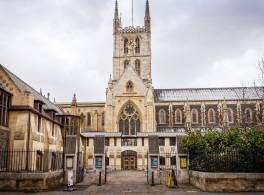
Restoration and upkeep of cathedrals
There are some 42 Anglican cathedrals in the UK, not to mention 20 or so Catholic cathedrals. Cathedrals form the most important collection of historic buildings in England. The largest and most ancient are internationally famous, the smallest are usually among the most significant buildings in their region and even the most recent are architectural masterpieces.
Master Craftsmen

Championing our heritage with modern craftsmanship
Twenty years ago, English Heritage (now Historic England) published its first-ever Register of Buildings at Risk across England, which featured nearly 2,000 buildings and monuments that were ‘neglected, broken and unloved’. Recently Historic England was delighted to announce that over two-thirds of those buildings were now safe, in both urban and rural areas right across the country.
Lightning Protection
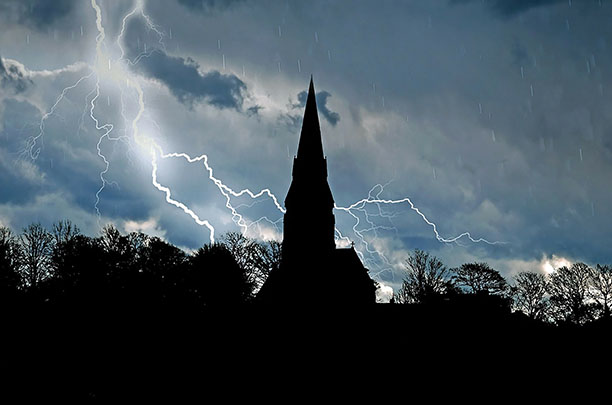
When lightning strikes are you protected against this act of God?
The issue of lightning protection in churches is one that has exercised this publication for many years. In this four-part series of spotlights on the issue we will be revisiting various aspects of the subject, beginning with an overview of current thinking.
Traditional Lime
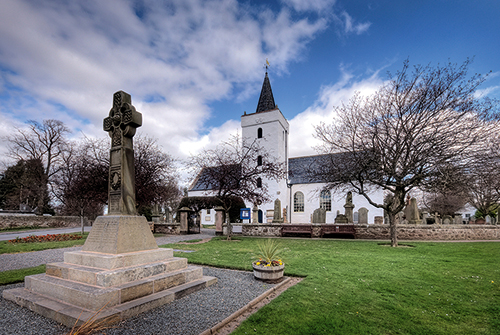
Lime: it’s better for buildings – and for the environment
It is now fairly well known that cement is not good for old buildings and that lime mortar should be used. But why? What are the advantages and what are the disadvantages? In order to begin to answer those questions it is necessary to understand the nature of traditional building, the process by which buildings used to be built, and how it differs from modern construction, the process by which we build today.
Audio Visual
Audio visual equipment in church buildings
This guidance is issued by the Church Buildings Council under section 55(1)(d) of the Dioceses, Mission and Pastoral Measure 2007. As it is statutory guidance, it must be considered with great care. The standards of good practice set out in the guidance should not be departed from unless the departure is justified by reasons that are spelled out clearly, logically and convincingly.
Read More...







Heritage Funding
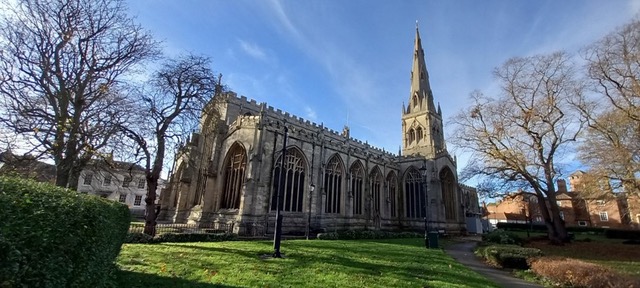
£48m heritage funding opens for churches and historic buildings
Part of £1.5 billion government investment in cultural organisations over a five-year period
Thousands of churches and historic buildings across England could benefit from a major new £48 million funding package aimed at urgent repairs, regeneration projects and wider community use.
CRE Events

Christian Resources Exhibition enters a new chapter as Church Resources Exhibition
The Christian Resources Exhibition (CRE), the UK’s largest church-related show, has changed hands in its 40th year and has been taken over by Quartz Business Media.
Insurance
You need to ensure that reasonable precautions are in place at your church to keep it safe for those who use it. To do this, you need to think about what might cause harm to people.
You will then need to decide if the precautions already in place are adequate. If they are not, you may need to identify further action to prevent any danger. When done formally, this is known as a risk assessment.
Church Maintenance
Church maintenance and repair: Calendar of Care
Just as prevention is always better than cure, maintenance is preferable to major repairs. But, such repairs may not always be avoidable. Church Care offers a monthly guide in our coming issues Starting in Spring
We can help you understand the common problems and areas that need your special attention, and give you tips for regular maintenance schemes.
Pest Control
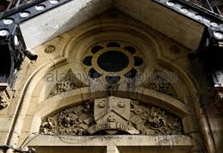
Michael Palin warns of pest threat to churches
Michael Palin is supporting the future of the UK’s historic churches and chapels with a voiceover for a new animated film. The 80 second animation, produced for the National Churches Trust, highlights why churches are some of the nation’s best loved buildings.
Town Halls
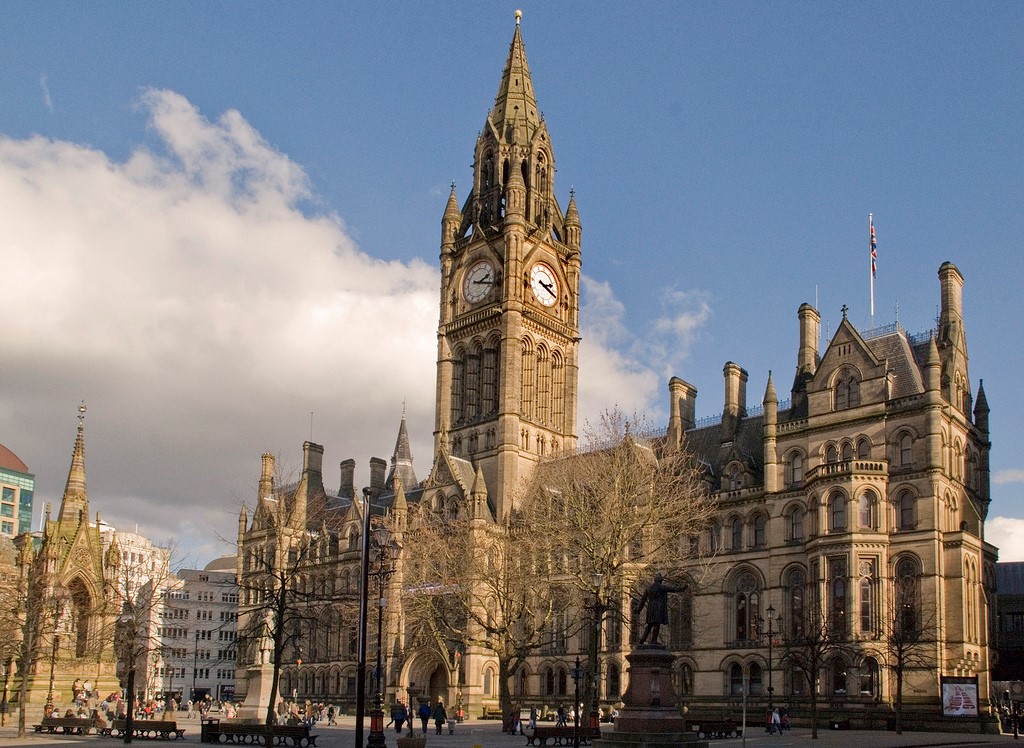
The history of the great Victorian Town Halls of Northern England
From industrial squalor to civic pride, the story behind some of the most impressive buildings of the North involve a unique mix of economics, grand designs and noble sentiments within communities.
Lead Roofing
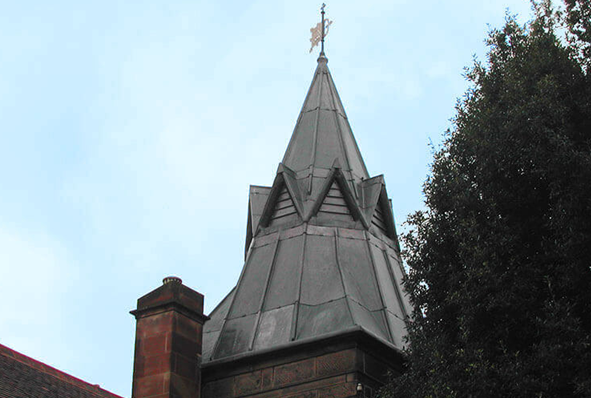
Lead is one of the oldest materials in the roofing industry and is still commonly used throughout the world today.
Lead roofing is a traditional roofing method which has been used in the industry for hundreds of years, and is therefore proven to be extremely reliable. Lead roofing, and sand-cast lead, in particular is ideal for old buildings such as churches or historical renovations, whereas milled lead roofing is a mass-produced alternative, used for precision and accuracy in homes and commercial buildings alike.
SEARCH OUR DIRECTORY
Murdoch Award winner puts a different kind of fleche on the bones
When someone like Alistair Rae says he’d never done a job like it before, you know that the winner of the 2008 Murdoch Award for outstanding leadwork must have been a pretty special project.Alistair is the managing director of D Blake & Co Ltd, based in Edinburgh and founder member of the Lead Contractors’ Association. In fact Alistair was the first LCA chairman, back in 1984, and has been a driving force behind its vetting, training and quality standards initiatives. It is therefore highly appropriate timing that as the LCA looks forward to celebrating its 25th anniversary in 2009, D Blake will also be widely celebrating an award which represents the ultimate accolade in leadwork.
The Murdoch Award, named in honour of Richard Murdoch and sponsored by Associated Lead Mills, is now in its 13th year. It is presented to a member of the Lead Contractors Association for their work on a project which is judged from the list of entries by a panel of judges (including Richard Murdoch himself) as being an outstanding representation of the leadwork craft.
First renewal
“In all the years of working with Blake and Co I have only ever had an opportunity to work on repairing a herringbone fleche, never the renewal,” said Alistair. “Now here we were, faced with the challenge of replacing three lead-covered fleches at the McManus Galleries in Dundee. Talk about waiting ages for a bus and then three come at once!”
For the uninitiated, a fleche or spirelet is a slender spire, often found over the intersection of the nave and transept ridges of a church roof. The sizing and fixing of lead sheet to such a feature requires a considerable amount of careful thinking at the design stage, let alone the degree of craftsmanship demanded to actually carry out the installation and retain the aesthetic perspective.
Alistair recalls: “When we examined the existing lead covering, it was immediately obvious we couldn’t just carry out a like-for-like replacement.
“Not only did the original workmanship have all the normal problems of oversizing and poor fixing; these common restrictions of thermal movement were compounded by the addition of the numerous crockets, domes, roses and fleurs de lys, all fixed through the lead using brass screws.”
Lead sheet must be allowed to expand and contract after installation, and sizing and fixing details are critical in ensuring a secure, weatherproof installation that will provide long-term maintenance-free performance.
“The redesign of the fleche incorporated all ‘best practice’ concepts,” said Alistair. “For a start, we reduced panel sizing to a maximum of 1.5m lengths and fixed the panels with two rows of copper nails.”
He recalls that the fixing of the crockets through the sheet did present a problem. How would the lead sheet be allowed its natural thermal movement if it was fixed at 300mm centres with a large brass screw?
“The screw fixing had to be copied to ensure a sound mechanical fixing,” he said, “because lead welding, however well done, would not have been sufficiently strong to hold the weight of the lead crockets.”
To overcome the restriction on movement at the hips that would be caused by the crockets, a capping was introduced at the hips and joined to the main panels with welted seams on each side. The capping was deliberately kept short, thereby reducing the amount of thermal movement it would be subjected to, but at the same time was just long enough for two crockets to be fixed through it.
Fleche too weak
Another problem was that the herringbone pattern on the main fleche had been formed using a wood-cored roll of 35mm diameter, which tapered to 20mm as it ascended the spire in order to retain perspective.
However, while aesthetically pleasing on the eye, the diameter of the roll was not sufficient to allow good head fixing and in some instances the panels were only held in place by the copper clips at the edge of the splash-lap.
“As if this wasn’t bad enough,” said Alistair, “we also wanted to replace the existing Code 4 sheet with Code 6 – a material that was on average 47% thicker and heavier – which meant we needed to install it differently but still give the same appearance.”
Blake’s did not therefore copy the detail at the wood-cored roll; the original design did not give a good head fixing and it allowed the lead to slip from square at the under-cloak. Instead their re-design followed current good practice for fixing vertical lead work by nailing the panel to the substrate with two rows of copper nails. An under-cloak was then lead welded to the panel.
This detail also provided a benefit at the intersection of the rolls as the panels formed an overlap at this point, giving good cover. The lead domes fitted on each side of the hips were lead welded in place as they were light enough to be fixed in that way.
To finish, all the lead sheet installed was coated with patination oil to prevent staining of the slating below. Care was taken at the laps to coat the underside of the lead and to re-coat at the lead welds.
Second success
Alistair Rae was absolutely delighted to have won the Murdoch Award for the second time – D Blake first won it in 1997.
“McManus proved a challenge both in re-designing the work to comply with modern standards and maintaining the appearance of an historic Grade One-listed building,” he said. “By carefully altering some of the detailing to allow thermal movement, and ensuring that the lead is correctly fixed, the building will have another long maintenance-free period, perhaps even longer than the 130 years it has achieved to date.”
In congratulating D Blake, current LCA chairman David Martin also paid tribute to the ‘quality standards’ ethic of the sponsors, Associated Lead Mills, who have supported the Murdoch Award for the past five years and had recently announced a further two years of sponsorship.
“It would be very easy for Associated Lead to adopt a commercially strategic view in their sponsorship and restrict Murdoch Award entries to only users of material that they themselves had supplied,” said Mr Martin.
“Instead, and in the true spirit of promoting quality standards in leadwork, Associated Lead have kept the Murdoch Award open to LCA members using any manufacturer’s product, provided it is rolled lead sheet to BSEN 12588 or traditional sand-cast sheet.”
“As a result we know the winner of the Murdoch Award really is the best of the best.”
• Further details of the Murdoch Award, D Blake & Co, or any of the other specialist leadwork members of the LCA can be found on its website at www.lca.gb.com, or by contacting the secretary, Lead Contractors Association, Centurion House, 36 London Road, East Grinstead, West Sussex RH19 1AB.
VISIT OUR ASSOCIATED SITES